Wednesday, November 15, 2023

Getting Device Issues Fixed Through Apple Support

In the complicated web of technology, the occasional glitch or abnormal behavior of our cherished Apple devices can throw us into a state of perplexity. Fret not! This blog post is your guide through the maze of doubts and uncertainties, unraveling the process of connecting with Apple Support, demystifying the Mobile Resource Inspector (MRI), and determining when it's time for a visit to the service center.

First Line of Defense: Reaching Out to Apple Support

  • Navigating the Support Channels: Owning an Apple device is like having a digital sidekick, but what happens when it starts acting up? The first port of call is the Apple Support team. Whether it's the trusty iPhone, iPad, MacBook, AirPods, or the ever-dependable Apple Watch, a simple phone call or a checking out the Apple Support app initiates the troubleshooting journey.
  • Diagnostic Maestros: Apple's Technical Support Team - Once you've made the call or checked out the apple support app, you're not alone in the digital wilderness. Apple's technical support team, armed with expertise, is ready to decipher the cryptic signals your device is sending. They utilize the Mobile Resource Inspector (MRI) – a diagnostic tool that operates like a digital Sherlock Holmes, uncovering the mysteries of malfunction.
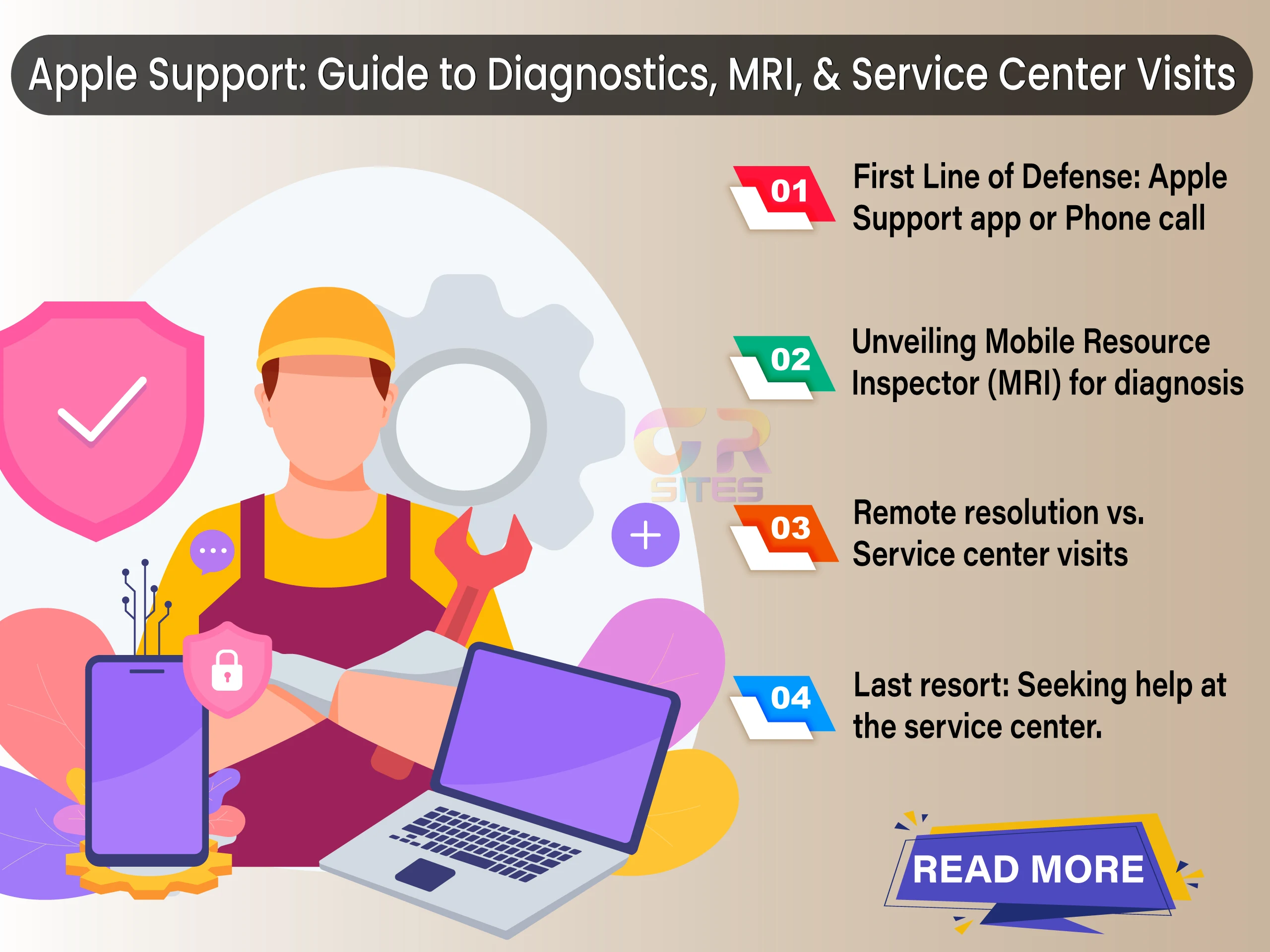
Decoding Device issue Dilemmas: Navigating Apple Support Like a Pro!

Apple Device Diagnostics: Unveiling the Mobile Resource Inspector (MRI)

  • A Peek into the MRI Process: Now, let's dive into the fascinating world of MRI. It's not a medical device but a digital detective that remotely probes your Apple device, seeking out the hidden culprits behind abnormal behavior. Think of it as a check-up for your gadget, but instead of a stethoscope, it uses virtual probes to identify glitches and malfunctions.
  • Remote Resolution vs. Service Center Visit - Once the MRI has completed its virtual investigation, the support team will guide you. If the issue can be remedied remotely, consider it a win – you've bypassed the need for a physical visit. However, if the ailment requires more hands-on attention, they'll suggest a trip to the Apple service center.

Service Center and Beyond: Knowing When to Visit

  • Battery Woes, Manufacturing Defects, and Accidental Repairs - Apple service center is the bastion of hands-on solutions. But when is it time to make that pilgrimage? If you're grappling with battery issues, suspect a manufacturing defect, or your device requires accidental repairs, it's a clear sign to pack your device and head to the service center.
  • Cautionary Note on Self-Repairs - In the age of online tutorials and DIY enthusiasts, the temptation to fix your Apple device at home might be strong. However, Apple, with its intricately designed devices, advises caution. Attempting self-repairs can lead to more woes than wins, turning a minor glitch into a major catastrophe.
  • Last Resort: When Self-Repairs Lead to Service Center Doors - If, despite the cautionary tale, you've ventured into the realm of self-repairs and found yourself knee-deep in digital chaos, fear not. The Apple service center is your beacon of hope. They specialize in fixing not only what ails your device but also the unintended consequences of well-intentioned DIY endeavors.

Conclusion

In the dynamic world of Apple devices, glitches and malfunctions are the occasional bumps in the digital road. Knowing how to navigate the labyrinth of support channels, leverage the Apple support app leveraged with diagnostic prowess of MRI, and discern when a service center visit is essential empowers you as a savvy device owner.So, the next time your iPhone, iPad, MacBook, AirPods, or Apple Watch seems to have a mind of its own, fear not. Armed with the knowledge from this guide, you can confidently face the quirks and ensure your beloved devices continue to be your trusty digital companions.

Keep reading

Saturday, October 14, 2023

Apple's Missing Battery Management for Fast Charging

In the fast-paced world of technology, the battle is not just about who has the best features, but also who can make those features last. Apple, known for its innovation, lags behind Android in the crucial realms of battery management and fast charging. In this blog post, we'll delve into why Apple should adopt Android's battery management strategies to keep its users satisfied.

Apple vs. Android: A Charged Battle

  • Android Advantage: Let's face it, Android has been setting the gold standard in battery management and fast charging. While Android users revel in quick top-offs and longer-lasting batteries, Apple users can't help but feel the difference.
  • Apple's Struggle with Battery Degradation: Apple devices, while leading in numerous aspects, continue to grapple with battery degradation issues. Many users find themselves replacing their devices prematurely due to battery failures. A closer look at Android's approach could be the game-changer Apple needs.
  • Silent Shift: There's been a quiet shift in the tech world, where battery life is no longer a luxury but a necessity. The Android ecosystem has embraced this wholeheartedly, while Apple seems to be dragging its feet.
Apple's Missing Piece: Battery Management in a Fast-Charging World

Swift Charge, Swift Drain

  • Android's Fast-Charging Solutions: Android users often enjoy the benefits of fast charging without experiencing significant battery degradation. These devices incorporate charging systems that efficiently manage power intake, reducing wear and tear on batteries.
  • Apple's Cautious Approach: In contrast, Apple's approach to fast charging has been conservative. While it prioritizes battery health, it can leave users longing for a quicker top-up. Android's balance between speed and longevity is an aspect Apple should consider integrating.

Road to Harmony

  • Why Apple Needs to Adapt: As the tech world charges forward, Apple's lag in battery management and fast charging solutions could leave it out of the race. It's not just about keeping up but also delivering a seamless user experience.
  • Finding the Apple-Android Middle Ground: While Apple has prioritized battery health, it's time to bridge the gap between their approach and Android's solutions. Embracing Android's energy-efficient strategies without sacrificing battery life is the way forward.

Conclusion: Charging into the Future

Apple's innovation has led it to new heights, but in the race to provide a holistic user experience, battery management and fast charging are two critical facets that deserve attention. Emulating Android's strategies in these areas doesn't mean compromising on quality; it's about evolving to meet the demands of today's tech-savvy users. With a fresh focus on both battery longevity and fast charging, Apple can charge into the future with renewed vigor, keeping its users satisfied and always ahead of the curve.

Keep reading

Tuesday, September 19, 2023

Brighter Vision: Mandatory Yearly Eye Assessments for Kids

Mandatory Yearly Eye Assessments for Kids
In the ever-evolving world of education, where knowledge is the beacon guiding our children's futures, there's an increasingly pervasive issue that often goes unnoticed until it's too late: myopia in kids. This vision problem, once a rarity, is now on the rise at an alarming rate. In a time when myopia, or nearsightedness, is on the rise among children, the importance of early detection through yearly eye assessments cannot be overstated.

Myopia Epidemic: A Growing Concern

  • Unraveling the Myopia Puzzle - Myopia isn't just a matter of needing glasses. It's a complex vision disorder that can affect a child's quality of life and academic performance. The puzzle lies in the fact that many parents and educators are unaware of the gravity of this issue.
  • Quiet Progression: One of the most insidious aspects of myopia in children is its gradual progression. It often worsens over time, increasing the risk of severe myopia and related eye conditions. Sadly, this progression often goes unnoticed until it becomes a significant problem.
  • Burden on Learning: Imagine trying to absorb the wonders of the world when the world itself a blur is. That's the challenge myopic children face daily. It's a burden that affects their academic performance, and the sad truth is that many teachers and parents may not even be aware of it.

Yearly Eye Assessments: Illuminating the Path

  • Power of Early Detection: The cornerstone of managing myopia in children is early detection. Yearly eye assessments can unveil subtle signs of myopia before they become pronounced. This knowledge empowers parents, educators, and healthcare professionals to take timely action.
  • Schools as the Frontline: The responsibility of ensuring the best eye health for children doesn't rest on parents alone. Schools play a pivotal role in mandating yearly eye assessments for kids. 

Making Yearly Assessments Mandatory

  • A Joint Responsibility: Ensuring that every child undergoes a yearly eye assessment is a shared responsibility between parents, schools, and governments. By making these assessments mandatory, we create a comprehensive system of care for our children's eye health.
  • Role of Schools: Schools can act as catalysts for change. By partnering with eye care professionals, they can facilitate convenient and non-invasive eye assessments for students. These assessments can be integrated into the school health program, reducing the burden on parents.
  • Government Initiatives: Governments, at local and national levels, can draft policies that mandate yearly eye assessments for children. These policies should ensure that assessments are accessible and affordable for all families, regardless of their socioeconomic status.
Conclusion: A Clear Path to a Brighter FutureBy embracing yearly eye assessments and myopia management strategies, we can ensure that our children see the world with clarity and enthusiasm. It's a responsibility we all share—to provide them with the best tools for a brighter tomorrow. So, let's embark on this journey together, and together, let's give our children the vision they need to explore the world with wonder and confidence. A clearer path to a brighter future starts with a simple yearly eye assessment.

Keep reading

Friday, July 7, 2023

Passkey Authentication: The Future of Login Simplified

Passkey Authentication: The Future of Login Simplified
With the constant bombardment of online accounts and the requirement for strong passwords, remembering and managing multiple passwords has become a challenging task for users. However, Gmail has taken a groundbreaking step towards simplifying the login process with the introduction of passkey authentication. With passkeys, logging into your Gmail account has never been easier. As we enter the mid of 2023, it's time for other major platforms, such as shopping sites, office applications, and banking institutions, to embrace the passkey revolution.

Power of Gmail's Passkeys
  • A New Era in Authentication: The introduction of passkeys by Gmail has brought a sigh of relief to millions of users worldwide. No longer do we need to struggle with remembering different passwords for each account. Instead, passkeys enable us to log in using any available device's authentication, such as touch ID or Face ID. This convenience and simplicity have truly transformed the login experience, making it faster and more user-friendly.
  • Simplifying the Login Process: Gmail's passkeys eliminate the need for traditional passwords, streamlining the login process. By leveraging the authentication methods available on your device, such as fingerprint or facial recognition, you can securely access your account with a simple touch or glance. Say goodbye to the hassle of complex passwords and hello to a seamless and hassle-free login experience.
Future of Passkeys: 
  • The Call for Adoption: As Gmail paved the way with its passkey authentication, it's time for other major platforms and institutions to follow suit. Shopping sites, office applications, and banking institutions should consider adopting passkeys to enhance security and convenience for their users. By embracing passkeys, these platforms can revolutionize the login experience and ensure their users' data remains protected.
  • Strengthening Digital Security: The adoption of passkeys by major platforms will strengthen digital security on a broader scale. Passkeys offer an alternative to traditional passwords, reducing the risk of password-related vulnerabilities, such as weak or reused passwords. This shift toward passkey authentication aligns with the industry's ongoing efforts to prioritize user security and combat cyber threats.
Passkey authentication introduced by Gmail serves as a testament to the future of authentication. As technology continues to advance, the focus is shifting towards more secure and user-friendly authentication methods. Passkeys provide a glimpse into this future by leveraging the capabilities of modern devices and biometric technologies. The success and widespread adoption of passkeys by Gmail demonstrate the need for other major platforms, such as shopping sites, office applications, and banking institutions, to follow suit. By embracing passkey authentication, these platforms can reduce the burden of password management and enhance the security of their users' accounts.

It's time to say goodbye to the frustrations of password management and welcome the future of authentication with passkeys. The benefits are undeniable, offering simplicity, convenience, and enhanced security. Let's encourage the adoption of passkeys and make the login experience across all platforms more seamless and secure.

Keep reading

Tuesday, May 30, 2023

OTT Fatigue: Too Many Subscriptions, Too Much Content

The Over-The-Top (OTT) platforms have revolutionized how we consume content, providing an abundance of movies, TV shows, and original productions at our fingertips. However, with this vast array of options comes a new challenge for consumers: the need to subscribe to multiple platforms, leading to potential financial strain and a phenomenon known as OTT content fatigue.

Rise of OTT Platforms

In the past decade giants like Netflix, Amazon Prime Video, Disney+, and Hulu have dominated the market, capturing the attention of viewers worldwide. These platforms offer a wide range of content, catering to various genres and tastes. As a result, traditional cable and satellite TV subscriptions have taken a backseat, with consumers embracing the convenience and flexibility offered by OTT services.

Content Diversification and Consumer Behavior

The proliferation of OTT platforms has led to a remarkable diversification of content. There is now something for everyone, from gripping dramas and thrilling action movies to captivating documentaries and animated series. This diversification reflects the changing preferences and behaviors of modern audiences who seek personalized and on-demand entertainment experiences.

The Subscription Conundrum

While content diversification is undoubtedly a positive aspect of the OTT revolution, it has also brought about a subscription challenge. To access a desired variety of content, consumers often find themselves subscribing to multiple platforms simultaneously. Each platform comes with its own monthly fee, and when combined, these subscriptions can accumulate to a significant expense. As a result, consumers face the challenge of managing their entertainment budget effectively.

OTT Fatigue Content Diversity & Subscription Overload

Financial Implications for Consumers

OTT platforms, individually, may seem reasonably priced, but when you consider the cumulative cost of multiple subscriptions, the financial implications become evident. Subscribing to numerous platforms can lead to a substantial dent in the pockets of consumers. Moreover, the subscription model requires a monthly commitment, leaving little room for flexibility or the ability to scale back expenses during financially challenging times.

The Challenges of OTT Content Fatigue

As consumers juggle multiple subscriptions, they may experience OTT content fatigue. This phenomenon occurs when individuals feel overwhelmed by the sheer volume of content available across platforms. Browsing through an extensive catalog can be time-consuming and mentally taxing, making it difficult for viewers to find content that truly captures their interest. The paradox of choice sets in, and viewers may find themselves spending more time searching for something to watch rather than actually enjoying the content.

Finding Solutions: Consolidation and Bundling

To address the challenges posed by the subscription overload, consumers are seeking solutions that provide a more consolidated and cost-effective approach. Some platforms have recognized this need and started offering bundled subscription plans, allowing users to access multiple services at a discounted rate. Consolidation efforts aim to streamline the user experience and alleviate the financial burden associated with subscribing to numerous platforms.

Striking a Balance

As the OTT market continues to evolve, striking a balance between content diversity, affordability, and user experience is crucial. Platforms must understand the financial limitations and viewing habits of their target audience. By exploring innovative pricing models, offering flexible subscription options, and continuously improving content discovery algorithms, platforms can alleviate subscription overload and cater to the needs of their users effectively.

Conclusion

The rise of numerous OTT platforms has undoubtedly revolutionized the entertainment industry, providing viewers with an unprecedented variety of content. However, the diversification of content has also led to challenges such as subscription overload and OTT content fatigue. By finding the right balance between content diversity, affordability, and convenience, the industry can ensure that consumers continue to enjoy a rich and engaging entertainment experience without feeling overwhelmed or burdened.

Keep reading

Wednesday, May 24, 2023

JioCinema entry: The Dynamic OTT Market in India

JioCinema entry: The Dynamic OTT Market in India
With the recent partnership between JioCinema and renowned international studios HBO and Warner Bros, the competition in the Indian OTT landscape has intensified. This article delves into the impact of this partnership on legacy players like Disney+Hotstar, Sony LIV and Zee5, highlighting the significance of pricing as a major factor for users in India.

Emergence of JioCinema and the HBO & Warner Bros Partnership

JioCinema, a popular streaming platform backed by Reliance Jio, has emerged as a formidable player in the Indian OTT market. Its recent partnership with HBO and Warner Bros has further strengthened its content library, bringing globally acclaimed shows and movies to Indian viewers. This strategic collaboration has elevated JioCinema's offerings, enticing users with a diverse range of high-quality content.

Impact on Legacy OTT Players: Disney+Hotstar Sony LIV & Zee5

The entry of JioCinema into the market and its partnership with HBO and Warner Bros has disrupted the landscape for legacy OTT players like Sony LIV and Zee5. These platforms now face the challenge of competing against the mighty JioCinema and its expansive content library. To retain their user base and stay relevant, Disney, Sony LIV and Zee5 must adopt effective strategies and differentiate themselves in this fiercely competitive environment.

Competing Against JioCinema: Factors for Success

To successfully compete against JioCinema, legacy OTT players need to focus on several key factors that influence user preferences in the Indian market. While content remains king, other aspects such as pricing, user experience, content differentiation, marketing strategies, and partnerships also play crucial roles in attracting and retaining users.

  • Pricing as a Key Competitor in the Indian Market: In a price-sensitive market like India, the affordability of OTT subscriptions often becomes a determining factor for users. Legacy players like Sony LIV and Zee5 must carefully analyze their pricing strategies to strike a balance between offering value for money and generating revenue. By understanding the pricing preferences of Indian users, these platforms can leverage competitive pricing plans to maintain their market share.
  • Balancing Quality and Affordability: While pricing is important, legacy OTT players must also focus on providing high-quality content and an immersive user experience. The availability of popular and exclusive shows, movies, and regional content can sway users' decisions. By investing in both original and licensed content, platforms can cater to the diverse tastes and preferences of Indian viewers.
  • Differentiating Content Offerings: To stand out in a competitive market, Disney, Sony LIV and Zee5 should curate content that appeals to specific target audiences. By identifying niche genres and producing original shows or acquiring exclusive rights to popular regional content, these platforms can attract and engage viewers who are looking for unique and differentiated offerings.
  • Power of Partnerships: Strategic partnerships with content creators, production houses, and even telecom operators can amplify the reach and visibility of legacy OTT players. Collaborations with popular regional studios, renowned filmmakers, or influential artists can help these platforms secure exclusive content rights and expand their user base.
  • Adapting to Changing Consumer Preferences: The OTT landscape is continuously evolving, and legacy players must adapt to changing consumer preferences. By closely monitoring user data, preferences, and consumption patterns, Sony LIV and Zee5 can make data-driven decisions to tailor their content offerings and provide a personalized experience that resonates with their target audience.
Conclusion: The Road Ahead for Legacy OTT Players: 
The recent partnership between JioCinema and HBO & Warner Bros has injected new energy into the Indian OTT market. Legacy players like Sony LIV and Zee5 face the challenge of competing against JioCinema's extensive content library and Reliance Jio's market presence. By focusing on pricing, content differentiation, user experience, and effective marketing strategies, these platforms can navigate the competitive landscape, retain their user base, and attract new subscribers.

Keep reading

Saturday, April 29, 2023

Aging Laptops and the Need for a Lite Operating System

Aging Laptops and the Need for a Lite Operating System
In today's fast-paced technological world, laptops have become an integral part of our daily lives. They serve as our portable workstations, entertainment hubs, and communication tools. However, unlike mobile phones that are frequently upgraded, laptops tend to age out slower due to their higher cost and longer lifespan. As a result, many users face challenges with the performance, compatibility, and security of their aging laptops and their operating systems. To address these issues, Microsoft and Apple should consider launching a lite version of their operating systems specifically designed for aging laptops, with limited features and support for basic software applications.

Challenges of Aging Laptops and Their Operating Systems

As laptops age, their hardware components and operating systems may not keep up with the demands of modern software and applications. Older laptops may struggle with slow performance, software incompatibilities, and security vulnerabilities. Operating systems that were once supported with regular updates and patches may no longer receive adequate support, leaving users at risk of security threats and compromising their overall user experience. This can lead to frustration and decreased productivity for laptop users who rely on their devices for work, communication, and entertainment.

Solution: Launch of Lite Version OS for Laptops

To address the challenges faced by aging laptops, Microsoft and Apple can consider launching a lite version of their operating systems. This lite version would be specifically designed for older laptops and would offer limited features and support for basic software applications. The lite version OS would be optimized for resource utilization, focusing on performance, compatibility, and security, tailored to the capabilities of aging hardware.

Benefits of Lite Version OS for Aging Laptops

The introduction of a lite version OS for aging laptops can bring several benefits to users, including:
  • Extended Lifespan of Laptops: By offering a lite version OS that is optimized for aging hardware, Microsoft and Apple can extend the lifespan of laptops that may not be capable of running the latest full-featured operating systems. This would allow users to continue using their laptops for a longer duration without having to invest in new hardware, reducing electronic waste and promoting sustainability.
  • Better Performance and Compatibility: The lite version OS would be optimized for resource utilization, resulting in improved performance and better compatibility with software applications. This would enable users to run basic software applications smoothly on their aging laptops, ensuring a seamless and productive user experience.
  • Enhanced Security and User Experience: With regular updates and patches, the lite version OS would provide enhanced security measures to protect aging laptops from security threats. This would ensure that users can continue to use their laptops without worrying about security vulnerabilities that may exist in older operating systems. Additionally, a lite version OS with a simplified user interface would offer a user-friendly experience, catering to the needs of older laptops users who may not be familiar with complex operating systems.
  • Cost Considerations: The cost considerations of upgrading to a new laptop can be a significant factor for many users. Purchasing a new laptop can be a substantial investment, especially if the existing laptop still meets basic needs but struggles with performance and compatibility due to an outdated operating system. Launching a lite version OS specifically for aging laptops can provide a cost-effective solution for users to extend the lifespan of their laptops without the need for expensive hardware upgrades.

How Microsoft and Apple can Implement Lite Version OS

Microsoft and Apple can implement a lite version OS for aging laptops by considering the following approaches:
  • Limited Features and Support for Basic Software Applications: The lite version OS should be designed to cater to the basic needs of users, offering essential features and support for basic software applications such as web browsing, email, document editing, and multimedia playback. Unnecessary features that may require higher system requirements can be omitted to optimize resource utilization and performance on aging hardware.
  • Simplified User Interface and Resource Optimization: The user interface of the lite version OS can be simplified to ensure ease of use for older laptop users who may not be familiar with complex operating systems. Resource optimization techniques, such as reducing background processes and unnecessary animations, can be implemented to minimize resource usage and enhance performance on aging hardware.
  • Potential Impact on the Laptop Market and User Adoption: The launch of a lite version OS for aging laptops can have a significant impact on the laptop market and user adoption. Many users who are hesitant to invest in new laptops due to cost considerations or environmental concerns may find the option of a lite version OS appealing. This can potentially lead to increased user adoption and extended lifespan of laptops, reducing electronic waste and promoting sustainability.
Moreover, the introduction of a lite version OS can also benefit users in developing countries or regions with limited access to high-end hardware. It can provide an affordable option for users to utilize their aging laptops and continue to meet their basic computing needs without the need for costly hardware upgrades.

My View: Embracing Lite Version OS for Aging Laptops

As laptops tend to age out slower and are often more expensive compared to mobile phones, the launch of a lite version OS by Microsoft and Apple can be a viable solution to extend the lifespan of aging laptops. By offering limited features and support for basic software applications, optimized performance, and enhanced security, a lite version OS can provide a cost-effective and sustainable option for users to continue using their aging laptops. This can contribute to reducing electronic waste, promoting sustainability, and catering to the needs of laptop users who may not require high-end hardware for their basic computing needs. There's more where this came from! Explore "G R Team Sites" for additional content on various topics.

Keep reading

Wednesday, March 22, 2023

Reporting Spam Calls on iPhone in India Without the App

TRAI's DND App Still Unavailable on Apple's App Store - What's Going On?

Updated September 2026: in 2023 I asked why TRAI's DND app had disappeared from Apple's App Store, leaving iPhone users without an easy way to report spam calls and SMS. I have rewritten it into a guide to blocking and reporting spam on an iPhone in India, whatever the app's status.

The TRAI DND app let users register their preferences and report unsolicited calls and messages. On iPhone, it became slow and unresponsive, and was then no longer available on the App Store, reportedly because of compliance issues and a lack of updates for newer iOS versions. For iPhone users, reporting spam became harder just as spam calls increased. Check the App Store for the app's current status, but you do not depend on it.

How do you stop promotional calls and SMS in India?

Register your preferences through your operator. You can send an SMS to 1909 to block all commercial communication, or choose specific categories. Your operator's app or website usually offers the same setting. Registration takes effect within a few days.

How can you report spam from an iPhone?

  • By SMS to 1909: report an unsolicited call or message with the number and date, following your operator's format.
  • Through your operator's app, where spam reporting is offered.
  • On Sanchar Saathi: the government's Chakshu facility lets you report suspected fraud calls and messages.

What can the iPhone do by itself?

Turn on Silence Unknown Callers in the Phone settings, which sends calls from numbers not in your contacts to voicemail. Filter unknown senders in Messages. Block individual numbers from the recent calls list. Some caller identification apps can also integrate with the Phone app to label likely spam.

What is the difference between spam and fraud?

Spam is unwanted marketing; fraud tries to steal money or information, often by impersonating a bank, courier or government agency. Never share OTPs or click links in unexpected messages. Report fraud attempts through Chakshu and, if you have lost money, to the national cybercrime helpline 1930 without delay.

Does reporting actually help?

Reports feed operator and regulator action against registered telemarketers and repeat offenders. Individual reports rarely produce visible results, but together they build the data used to disconnect numbers. Registering DND preferences has the most direct effect on your own phone.

Keep reading

Friday, February 3, 2023

Google Storage Full? How to Reclaim Your 15 GB

Impending Limitations of Google Photos Cloud Storage

Updated September 2026: in early 2023 I wrote about Google's change to count photos against the free 15 GB, and how quickly that fills for anyone with years of photos. I have rewritten it into a practical guide to reclaiming space in a full Google account.

Unlimited photo storage alongside 15 GB for Drive and Gmail felt generous. Once new photo uploads started counting against the 15 GB, from June 2021, many of us, me included, found the space shared by Photos, Gmail and Drive filling quickly. Before paying for more, it is worth clearing what you do not need.

What counts against Google's free 15 GB?

Everything across Google Photos, Gmail and Google Drive: photos and videos uploaded since June 2021, email and attachments, and files in Drive, including items in trash until it is emptied. Photos uploaded in "high quality" before June 2021 remain exempt.

How do you find what is using the space?

Open the Google One storage page or the storage manager in Google Photos. It shows the split between Photos, Gmail and Drive and suggests items to review, such as large files, blurry photos and screenshots.

Where is space quickest to reclaim?

  • Large videos: a few long videos can use more space than thousands of photos.
  • Gmail attachments: search for "has:attachment larger:10M" and delete old ones you do not need.
  • Drive files: sort by storage used and remove old downloads and duplicates.
  • Screenshots and blurry shots: the storage manager groups these for quick review.
  • Trash: empty it in Photos, Gmail and Drive, since deleted items still count until then.

Should you switch to Storage saver quality?

It reduces the size of future uploads, and Google offers an option to convert existing photos to Storage saver to recover space. Conversion reduces quality permanently, so keep full-quality copies of important photos elsewhere before using it.

When is it time to pay?

If you have cleared the obvious waste and still need space, a small Google One plan is inexpensive and can be shared with family. Compare it with alternatives such as OneDrive or iCloud if you also need their other features.

What should you do with old photos?

Keep an offline copy of your full library on an external drive, exported with Google Takeout. It protects you against account problems and future policy changes like the one in 2021.

Keep reading